Process of a Transaction in EVVM
Understanding how transactions work in the EVVM (Ethereum Virtual Virtual Machine) ecosystem requires examining its unique architecture. EVVM operates as a virtual blockchain where transactions are processed through a fisher-based validation and execution system, creating a gasless experience for users.
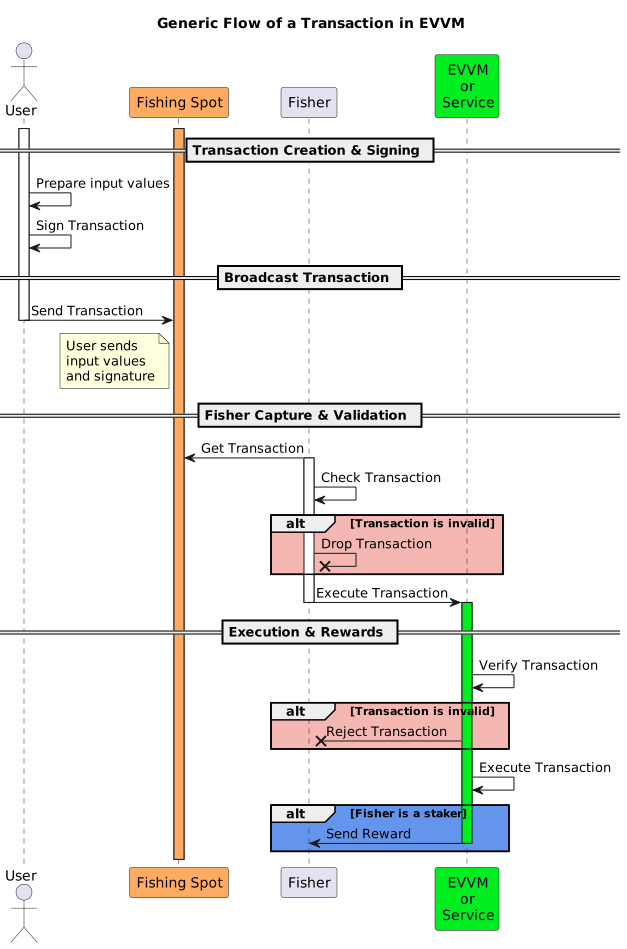
The transaction process consists of four key stages:
- Transaction Creation & Signing: Users create and cryptographically sign transactions using the EIP-191 standard
- Transaction Broadcasting: Signed transactions are sent to fishing spots where fishers can discover them
- Fisher Capture & Validation: Fishers monitor fishing spots, capture transactions, and validate their authenticity
- Execution & Rewards: Valid transactions are executed on EVVM, and rewards are distributed to participants
Each stage is explained in detail below.
Transaction Creation & Signing
In the first stage, users construct and cryptographically sign their transactions using the EIP-191 standard for secure authentication:
1. Transaction Payload Construction
Every EVVM transaction follows a standardized format that includes all necessary information:
string.concat(<evvmId>,",",<senderExecutor>,",",<hashPayload>,",",<originExecutor>,",",<nonce>,",",<isAsyncExec>)
Component breakdown:
<evvmId>: Unique identifier of the target EVVM instance (which virtual blockchain to use)<senderExecutor>: Address of the service contract authorized to consume the nonce (msg.sender). In most services this isaddress(this). Setting toaddress(0)allows any service to execute.<hashPayload>: Keccak256 hash of the abi-encoded function name and parameters:keccak256(abi.encode("functionName", param1, param2, ..., paramN))<originExecutor>: Address of the EOA allowed to initiate the transaction (tx.origin). Setting toaddress(0)allows any origin.<nonce>: Unique number to prevent replay attacks<isAsyncExec>: Boolean indicating if the nonce execution is asynchronous (true) or synchronous (false)
2. EIP-191 Signature Generation
The user signs the transaction using the EIP-191 standard, which ensures cryptographic authenticity:
signature = sign(keccak256("\x19Ethereum Signed Message:\n" + len(message) + message))
3. Broadcast to Fishing Spot
Once the transaction is signed, the user broadcasts the complete package to a fishing spot:
What gets broadcasted:
- The signed transaction (with EIP-191 signature)
- Input data (function parameters)
- Target function (which EVVM function to execute)
Where transactions can be sent (Fishing Spots):
- Public Mempool: Broadcasting to blockchain mempools where anyone can see and capture transactions (e.g., Ethereum mainnet mempool)
- Private APIs: Direct submission to fisher-operated APIs for faster or private processing
- Communication Channels: Any communication medium where fishers actively monitor for EVVM transactions
Gas Parameters for Mempool Transactions
When sending transactions to public mempools, specific gas parameters ensure the transaction waits for fisher capture instead of immediate execution:
Recommended gas settings:
Why these low values: These intentionally low gas parameters prevent miners from executing the transaction immediately, giving fishers time to capture and properly validate it through the EVVM system.
Fisher Capture & Validation
In this critical stage, fishers act as transaction processors who monitor fishing spots, capture user transactions, and perform comprehensive validation before execution:
1. Transaction Capture
Fishers actively monitor various fishing spots to capture transactions:
- Mempool Monitoring: Scanning blockchain mempools for EVVM transactions
- API Listening: Receiving transactions through private APIs
- Direct Submission: Users can submit transactions directly to specific fishers
2. Comprehensive Validation
Before execution, fishers perform thorough validation:
EIP-191 Signature Verification
- Fishers verify each EIP-191 signature to ensure transaction authenticity
- Multiple signatures may be required depending on the function (EVVM + service signatures)
- Invalid signatures result in transaction rejection
Nonce Verification
Nonces are unique numbers that prevent transaction replay attacks. EVVM supports two types:
- Synchronous Nonces: Must follow sequential order (1, 2, 3, 4...) for each user account
- Asynchronous Nonces: Can be any unused number, providing more flexibility for applications
- Service-Specific Nonces: Individual services like NameService and Staking maintain their own nonce systems
Balance & Authorization Checks
- Sender must have sufficient token balance for the transaction
- Required permissions and access rights are validated
- Service-specific requirements (e.g., staking status, username ownership) are checked
3. Fisher Requirements and Incentives
Who can be a fisher:
- Any Ethereum address can become a fisher and process transactions
- Stakers (users who have staked MATE tokens) receive enhanced rewards for their service
- Some advanced services may require fishers to be stakers for execution privileges
Fisher responsibilities:
- Cover gas costs for executing transactions on the host blockchain (Ethereum, Arbitrum, etc.)
- These costs are typically offset by the rewards received from successful transaction processing
Execution & Rewards
In the final stage, validated transactions are executed within the EVVM virtual blockchain, and the reward system distributes incentives to participants:
1. EVVM Execution
Once validated, the transaction executes within the EVVM virtual blockchain environment:
- Function Calls: The specified EVVM function or service function is invoked with the provided parameters
- State Updates: Smart contract states are modified according to the transaction logic (balances, ownership, etc.)
- Token Transfers: All required payments, fees, and token movements are processed atomically
2. Reward Distribution System
The EVVM ecosystem maintains a sustainable economy by rewarding participants who contribute to transaction processing and network security:
Base Rewards for Stakers
- EVVM Contract Rewards: Stakers receive base MATE token rewards for executing EVVM functions
- Service Rewards: Additional rewards from services like NameService, Staking Contract, etc.
- Enhanced Amounts: Stakers often receive multiplied reward amounts compared to non-stakers
Priority Fee Distribution
- Direct Fisher Payment: Optional priority fees paid by users are sent directly to the fisher who processes their transaction
- Market-Based Incentives: Higher priority fees create competition among fishers, leading to faster processing times
- User Control: Users decide whether to pay priority fees based on their urgency requirements
Service-Specific Rewards
Different services provide varying reward structures:
- NameService: Rewards for registration, renewal, and offer processing
- Staking Contract: Enhanced rewards for staking-related operations
- Treasury Operations: Rewards for deposit and withdrawal processing
- P2P Swap: Fees from peer-to-peer trading operations
3. Reward Requirements
- Staker Verification: Only verified stakers receive enhanced rewards
- Successful Execution: Rewards are only distributed upon successful transaction completion
- Gas Coverage: Fishers must cover host blockchain gas costs, which are typically offset by rewards
4. Multi-Service Coordination
EVVM enables sophisticated transactions that can interact with multiple services simultaneously:
- Cross-Service Operations: A single transaction can involve multiple EVVM services (payments, name registration, staking operations)
- Coordinated Rewards: The reward system automatically accounts for all services involved in a transaction
- Atomic Execution: All operations within a transaction either complete successfully together, or the entire transaction fails and reverts
Economic Model Summary
This multi-layered reward system creates a self-sustaining ecosystem where:
- Users pay for services they need, often without gas fees
- Fishers are compensated for processing transactions and covering gas costs
- Stakers receive enhanced rewards for their long-term commitment to network security
- Services can offer incentives to encourage usage and adoption
The result is a virtual blockchain that operates efficiently while maintaining economic incentives for all participants.